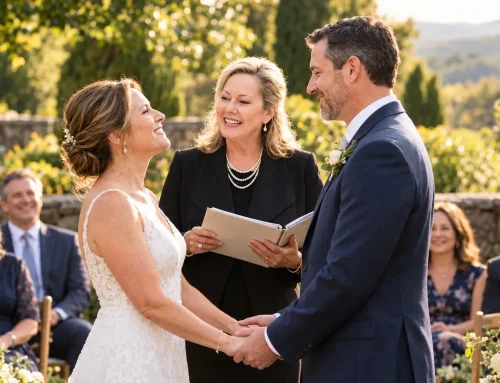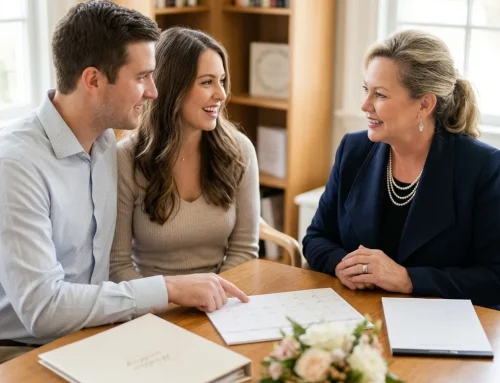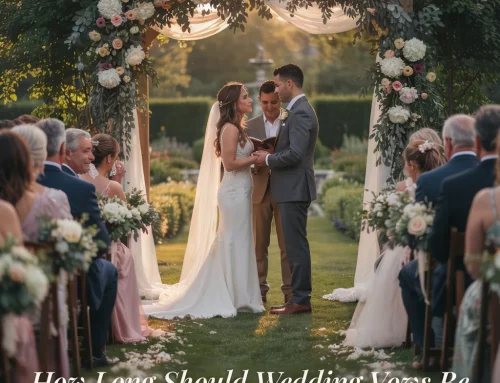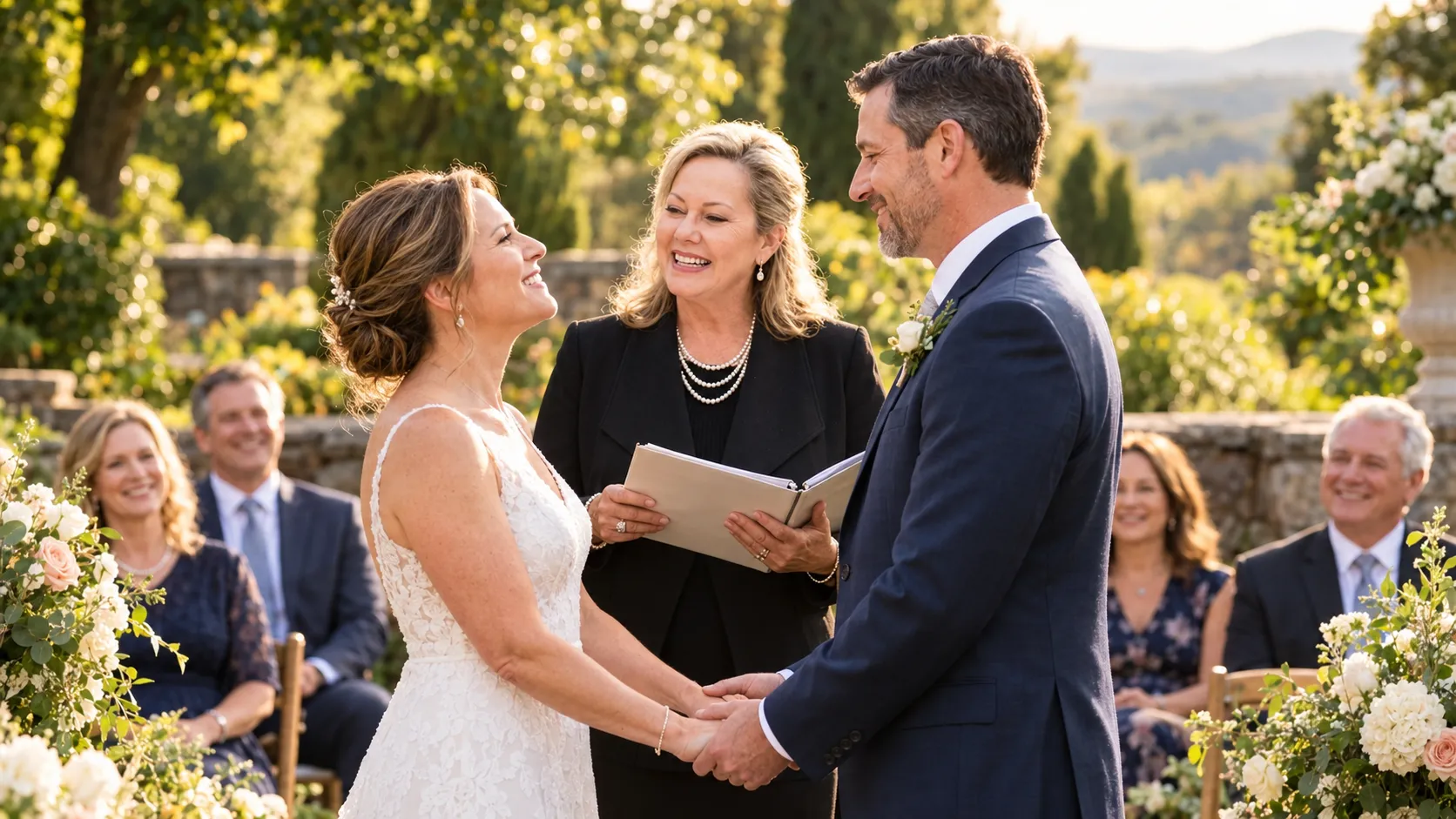
A wedding officiant is anyone who leads a wedding ceremony, provided that person is legally authorized to perform marriages in Virginia. A marriage commissioner is a civil officiant authorized through Virginia’s court system. The terms can overlap: a marriage commissioner may also provide the warm, personalized ceremony services people associate with a professional wedding officiant.
In other words, you do not necessarily have to choose between legal authority and a meaningful ceremony. The right person can provide both.
The Difference at a Glance
| Question | Virginia marriage commissioner | Wedding officiant |
| What does the title describe? | Civil authority to perform marriages | The person’s role leading a ceremony |
| Must the person be legally authorized? | Yes | Yes, if performing the legal marriage |
| Is the role religious? | Not inherently | May be religious, spiritual, secular or civil |
| Can the ceremony be personalized? | Yes, depending on the commissioner | Yes, depending on the officiant and service selected |
| Can the person perform ceremonies throughout Virginia? | Depends on the person’s authorization | Depends on the legal authority the officiant holds |
| Can one person be both? | Yes | Yes |
The most important distinction is not the label on a website or business card. It is whether the person is legally authorized in Virginia and able to create the kind of ceremony you want.
What Is a Virginia Marriage Commissioner?
“Marriage commissioner” is a term commonly used for a civil person authorized to perform marriage ceremonies in Virginia. Courts may also use terms such as civil celebrant or court-authorized celebrant.
Virginia Code § 20-25 allows a circuit-court clerk to issue an order authorizing a person to celebrate marriages in the Commonwealth. The court may require a bond of up to $500, and an authorization order may later be rescinded. Certain judges, retired judges and public officials identified in the law may also perform marriages without obtaining that order.
A marriage commissioner is not required to conduct a religious service. This makes a commissioner a natural choice for couples seeking:
- A civil or nonreligious wedding
- A simple legal ceremony
- An elopement or micro-wedding
- A ceremony that respects different beliefs
- A personalized ceremony without required religious language
- Confidence that the person performing the marriage has recognized legal authority
However, “civil” does not have to mean cold, rushed or impersonal. That depends on the individual commissioner and the service the couple chooses.
What Is a Wedding Officiant in Virginia?
“Wedding officiant” is a broad, everyday term for the person who leads a wedding ceremony. It describes what the person does, not one specific kind of Virginia credential.
A Virginia wedding officiant might be:
- A court-authorized civil celebrant or marriage commissioner
- A minister authorized under Virginia law
- A judge or another official permitted by statute
- Another person who has received the required circuit-court authorization
Professional wedding officiants often do much more than pronounce a couple married. Depending on the service, an officiant may help the couple:
- Decide on the ceremony’s tone and length
- Write or select vows
- Choose readings, blessings or rituals
- Tell their love story naturally
- Include children or other family members
- Blend spiritual, religious and secular traditions
- Plan the processional and ceremony flow
- Feel calm and prepared before the wedding begins
The title “wedding officiant” alone does not prove that someone is authorized to perform marriages in Virginia. Couples should always confirm legal authority directly.
Can the Same Person Be Both?
Yes—and for many couples, that is the ideal combination.
A court-authorized marriage commissioner can also be an experienced professional wedding officiant who creates personal, expressive ceremonies. Kathleen Ayers serves in both roles. She is a judge-appointed marriage commissioner authorized through Orange County and performs ceremonies throughout the Commonwealth of Virginia. She also works closely with couples to make each ceremony sound and feel like them.
Kathleen has officiated more than 500 wedding ceremonies and has worked in the wedding industry since 2003. That experience combines the legal knowledge couples need with the warmth, flexibility and attention to detail they want on their wedding day.
Does a Marriage Commissioner Only Perform Courthouse Weddings?
No. A marriage commissioner does not necessarily work inside a courthouse, and obtaining your license at a circuit court does not mean your ceremony must happen there.
Depending on availability and travel arrangements, a court-authorized commissioner may officiate at:
- Wedding venues
- Gardens and private homes
- Bed-and-breakfasts
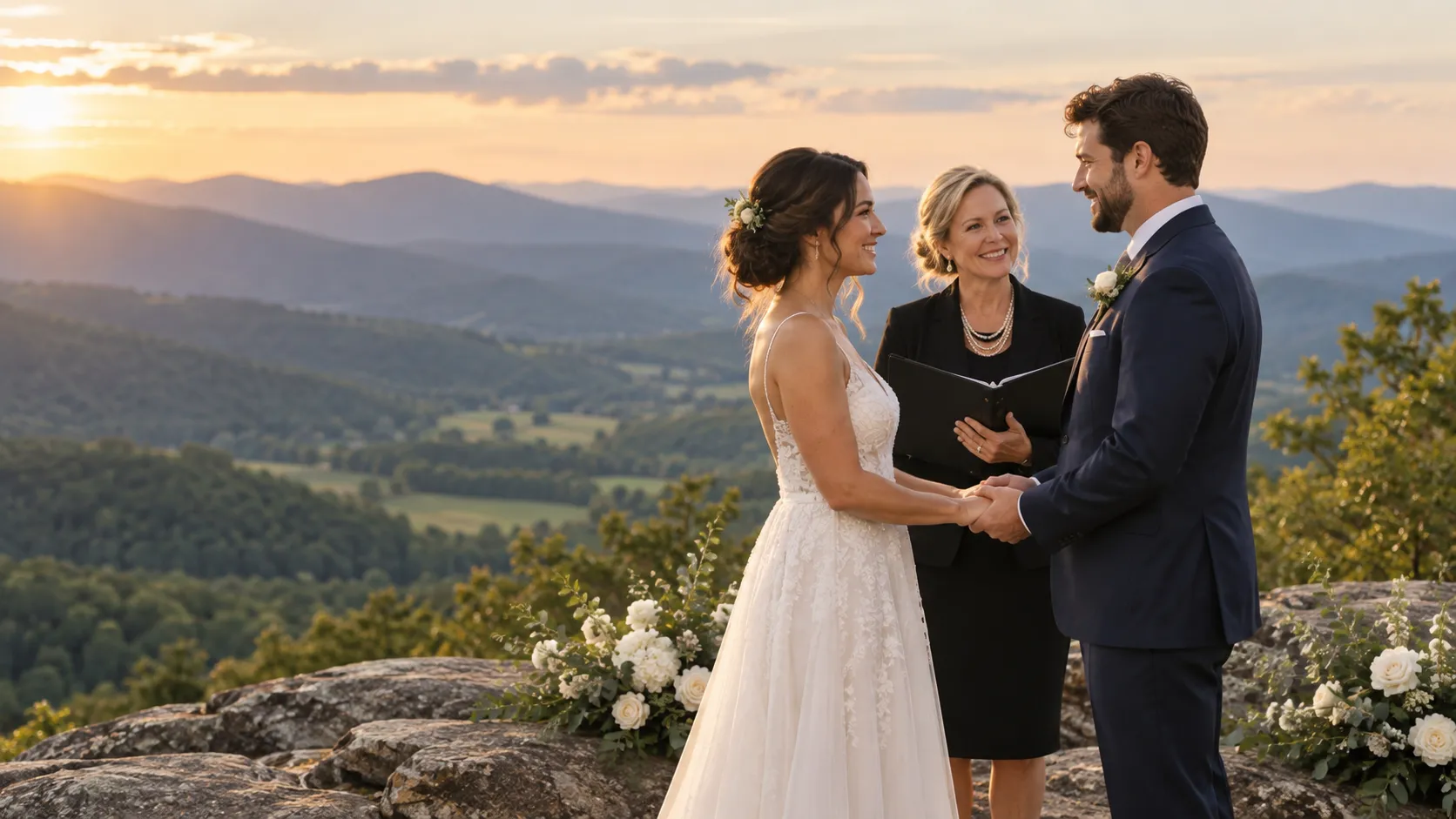
- Mountain overlooks
- Parks and vineyards
- Restaurants and event spaces
- Elopement locations
- Large traditional weddings
Your Virginia marriage license must be valid, your ceremony must occur in Virginia and the person performing it must have the proper authority. The setting and style can still be entirely your own.
Is a Marriage Commissioner Only for Short Civil Ceremonies?
Not at all. Some couples want a brief exchange of vows and rings. Others want a full ceremony with readings, family participation, traditions, humor and a personal love story.
A marriage commissioner may offer different ceremony options, so ask what is included. Do not assume that “civil ceremony” means a two-minute transaction—or that every commissioner provides extensive customization.
Kathleen can create ceremonies that are:
- Civil and straightforward
- Romantic and personal
- Spiritual without being tied to one religion
- Traditional or contemporary
- Lighthearted and joyful
- Inclusive of different cultures and beliefs
- Centered on children and blended families
The legal words may make the marriage official. The personal words make the moment memorable.
When Might a Minister Be the Better Choice?
A minister may be the natural choice when a couple wants a ceremony rooted in a particular faith, denomination or place of worship. Virginia Code § 20-23 establishes a process through which qualifying ministers may be authorized to perform marriages in the Commonwealth.
If your ceremony must follow specific religious requirements, speak with your faith leader early. Ask about premarital preparation, membership rules, required language and venue restrictions.
Couples who are spiritual but not affiliated with one denomination may prefer a flexible officiant who can include a prayer, blessing or sacred reading without requiring a formal religious service.
Can a Friend Officiate Our Virginia Wedding?
Possibly, but friendship is not a legal credential—and online ordination does not automatically guarantee authorization in Virginia.
Virginia law allows a person to apply through a circuit court for authorization to perform marriages. The decision belongs to the court, applicable fees may be required and a bond of up to $500 may be imposed. Couples should never assume the application will be approved or wait until the last minute to ask.
There is also a simple alternative: let your friend welcome guests, give a reading, tell part of your love story or offer a blessing while a legally authorized commissioner or officiant performs the marriage. Your loved one still has a meaningful role, and you avoid gambling your marriage’s validity on an unconfirmed credential.
How Should You Choose Between a Marriage Commissioner and a Wedding Officiant?
Start by choosing a person—not merely a title.
Ask these questions before booking:
- Are you currently authorized to perform marriages in Virginia?
- Can you perform our ceremony at our chosen Virginia location?
- Do you offer a simple civil ceremony, a personalized ceremony or both?
- Can we include personal vows, readings, prayers or family members?
- Will you help us plan the ceremony’s structure and flow?
- How do you handle the marriage documents after the ceremony?
- Are travel, rehearsal time and ceremony customization included?
- What happens if an emergency prevents you from attending?
- Can we read reviews from couples whose ceremonies were similar to ours?
- Do we feel comfortable talking openly with you?
That last question matters. Your officiant stands beside you during one of the most photographed, emotional and memorable moments of your wedding. Legal authority gets the job done; trust and connection make it feel right.
What Does a Marriage Commissioner Do After the Ceremony?
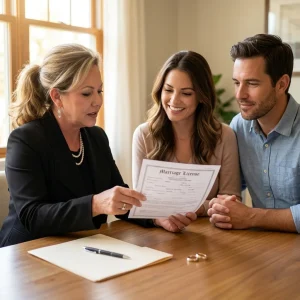
The authorized person completes the required portions of the marriage documents and returns them according to the issuing circuit court’s instructions. Before the wedding, confirm who will carry the license to the ceremony and how the officiant will handle it afterward.
Couples may later order certified copies of the completed marriage record from the appropriate clerk for name changes, benefits, insurance and other purposes.
Frequently Asked Questions
Is a marriage commissioner the same as a wedding officiant in Virginia?
A marriage commissioner is a type of legally authorized civil wedding officiant. “Wedding officiant” is the broader term for a person who leads the ceremony.
Is a marriage commissioner a judge?
Not necessarily. Virginia law authorizes several categories of people to perform marriages. A civil celebrant or marriage commissioner may be authorized by court order without being a judge.
Can a Virginia marriage commissioner perform a religious ceremony?
The commissioner’s authority is civil, but the ceremony may include spiritual or religious elements when the commissioner is comfortable providing them and the couple requests them. Discuss your preferences before booking.
Can a marriage commissioner perform a personalized ceremony?
Yes, if that service is offered. Ask how much customization is available and whether vows, readings, rituals or your love story can be included.
Does a marriage commissioner have to marry us at the courthouse?
No. A commissioner may perform ceremonies at many Virginia locations, subject to availability, travel policies and the scope of the person’s authorization.
Is an online-ordained friend automatically allowed to officiate in Virginia?
No. Do not rely on online ordination alone. The person should contact a Virginia circuit court and receive clear confirmation of legal authority before performing the ceremony.
Who returns the marriage license after a Virginia wedding?
The authorized officiant completes and returns the marriage paperwork according to the issuing court’s instructions. Confirm the process with your officiant and circuit court.
Can Kathleen Ayers perform our wedding outside Orange County?
Yes. Kathleen is a court-authorized marriage commissioner who may officiate ceremonies throughout Virginia.
Choose Legal Confidence and a Ceremony That Feels Like You
You should not have to choose between a ceremony that is legally sound and one that feels warm, personal and meaningful.
Kathleen Ayers brings both sides together. As a court-authorized marriage commissioner and experienced wedding officiant, she can perform your legal marriage while creating a ceremony that reflects your story, beliefs, personalities and plans for the future.
Whether you envision a simple civil ceremony, intimate elopement, spiritual celebration or large wedding, call (540) 395-6488 or contact Virginia Wedding Vows to ask about your date.
This article provides general educational information and is not legal advice. Virginia law and individual circuit-court procedures can change. Confirm current requirements with the circuit court issuing your marriage license and verify an officiant’s legal authority before the ceremony.